

India’s luxury automobile market is expected to witness muted growth in 2026, according to leadership at Mercedes-Benz India. While demand for ultra-premium vehicles remains healthy, economic pressures, changing buyer behavior, and global market uncertainty are expected to keep overall luxury car sales largely flat this year.
The outlook reflects a broader shift in India’s premium automotive sector, where automakers are focusing less on aggressive volume growth and more on profitability, customer experience, and high-end product portfolios.
Luxury Car Sales in India Face a Plateau
After several years of strong post-pandemic recovery, India’s luxury car market is entering a more cautious phase. Industry executives believe that although affluent buyers continue to spend on premium vehicles, the pace of growth is slowing significantly.
The luxury car segment is projected to grow only in low single digits or remain nearly flat throughout calendar year 2026. Total annual luxury retail volumes are expected to hover around the 52,000-unit mark. Factors such as foreign exchange volatility, rising ownership costs, and slower demand in the entry-level luxury category are contributing to the moderation.
This comes at a time when India’s broader passenger vehicle market is also witnessing softer consumer sentiment, especially in urban discretionary spending categories.
Mercedes-Benz India Continues to Lead the Segment
Despite the cautious market outlook, Mercedes-Benz India remains the strongest performer in the country’s premium automobile industry, closing the fiscal year with record retail sales of 19,363 units.
The company reported record revenue performance, supported by strong sales of top-end luxury vehicles priced above ₹1 crore. High-performance AMG models and premium SUVs have continued to attract affluent buyers even as entry-level luxury demand weakened.
Mercedes-Benz India’s strategy increasingly revolves around:
- Prioritizing value over volume to secure stable operational margins.
- Expanding the ultra-luxury segment to cater to highly customized consumer requirements.
- Improving customer ownership experiences through direct-to-customer retail models.
- Growing electric luxury vehicle offerings with locally assembled flagships.
- Enhancing dealership and public high-power charging infrastructure.
The company has emphasized that wealthy Indian consumers are becoming more selective and aspirational, preferring fully loaded premium vehicles over base luxury variants.
Why Luxury Car Growth Is Slowing in India
Several macroeconomic and consumer-driven factors are shaping the luxury vehicle market in 2026.
- Entry-Level Luxury Demand Is Weakening: Luxury brands historically relied on first-time buyers entering the premium segment through smaller sedans and compact SUVs. However, inflationary pressures and higher financing costs are making consumers more cautious. Entry-level luxury sales contracted by 18 percent over the past fiscal year, underperforming significantly compared to upper-tier models.
- Currency Fluctuations and Successive Price Hikes: Luxury cars in India depend heavily on imported components and completely built units. Rupee depreciation and foreign exchange fluctuations are increasing operational costs for manufacturers. This has forced major brands to announce multiple price revisions, including consecutive hikes across January, April, and the upcoming July cycles, adding pressure on retail buyers.
- Buyers Are Moving Toward Ultra-Luxury Models: Interestingly, while entry luxury demand is slowing, the ultra-premium category is seeing resilience. Vehicles priced above ₹1 crore continue to perform strongly, indicating that wealthy consumers are still willing to spend on exclusivity, performance, and personalization. Mercedes-Benz reported a 16 percent growth in its Top-End Luxury vehicle segment, which now accounts for 27 percent of its overall sales volume.
SUVs and Premium Sedans Continue to Dominate
Luxury SUVs remain the preferred choice among Indian buyers due to road conditions, practicality, and aspirational appeal. However, premium sedans are showing signs of resilience as well.
The Mercedes-Benz E-Class Long Wheelbase continues to perform strongly despite India’s SUV-heavy market, retaining its position as the bestselling luxury car in the country.
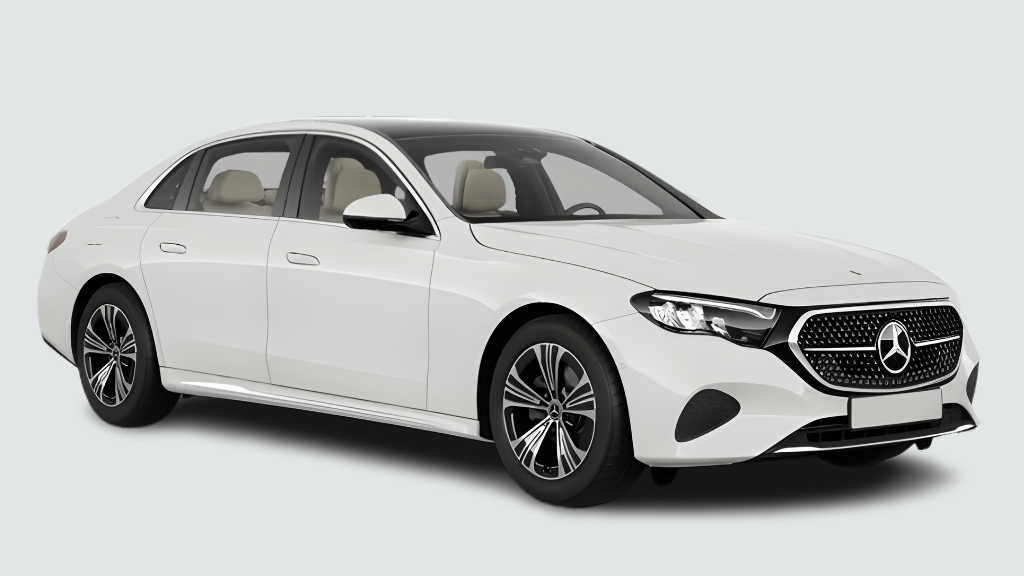
Consumers in the luxury segment are increasingly seeking:
- Advanced technology features including multi-screen digital cockpits and level two driver assistance systems.
- Chauffeur-driven comfort with extensive rear-seat recline, massage options, and independent climate control zones.
- High safety standards backed by rigid body construction and comprehensive active protection packages.
- Electrified mobility options that balance high power outputs with everyday urban efficiency.
- Brand prestige and deep customization programs to ensure individual styling preferences.
Electric Luxury Cars Could Drive Future Growth
One bright spot for the industry is the rising demand for luxury electric vehicles. India’s premium EV segment reached a record 5,404 units, showing that affluent buyers are becoming highly open to sustainable mobility solutions.
Mercedes-Benz has invested heavily in electric mobility and local EV assembly in India. High-priced electric models costing over ₹1.4 crore, such as the EQS SUV, witnessed an 85 percent volume surge.
As charging infrastructure improves and EV technology becomes more mainstream, luxury electric cars are expected to become a key growth driver over the next few years, supported by upcoming high-volume arrivals like the CLA Electric.
Competition in India’s Luxury Auto Market Is Intensifying
Competition among luxury brands is becoming sharper. While Mercedes-Benz remains the overall market leader, rivals are gaining significant momentum. BMW recorded a 14.47 percent growth rate to finish at 17,301 units, driven by strong quarterly registrations and an aggressive expansion in the luxury EV space where it holds a dominant 65 percent market share.
Automakers are now competing not only on vehicle performance but also on:
- Digital retail experiences and seamless online booking ecosystems.
- Subscription models and highly flexible corporate leasing programs.
- Customer service quality through rapid workshop turnarounds and digital updates.
- EV ecosystems, including fast-charging networks at strategic highway routes.
- Personalized ownership programs featuring unique lifestyle access and curated brand events.
This evolution suggests that the next phase of growth in India’s luxury automobile market will depend more on brand ecosystem strength than simply vehicle launches.
Outlook for India’s Luxury Car Industry
Although 2026 may not deliver explosive volume growth for luxury carmakers, the long-term outlook for India remains positive.
The number of high-net-worth individuals in India continues to expand across metro and Tier-2 cities, creating a stable customer base for top-end products. These structural trends are likely to support gradual expansion in the luxury mobility sector over the coming decade.
However, in the near term, automakers are expected to remain cautious and focus on profitability, premiumization, and customer retention rather than aggressive sales expansion. For consumers, this could mean better luxury experiences, more technologically advanced vehicles, and increased availability of premium EV options, even if overall industry growth remains subdued for now.
Conclusion
The luxury automotive landscape in 2026 reflects a market prioritizing value over sheer volume. While a flat growth trajectory might seem discouraging on the surface, the rapid expansion of the ultra-luxury and electric vehicle segments demonstrates that demand for premium engineering remains robust. As manufacturers recalibrate their strategies around luxury customer experiences and localized assemblies, the market is fundamentally maturity-driven.
Understanding these subtle shifts in consumer preferences, pricing structures, and retail strategies is critical to navigating the premium automotive space. Follow Motozite for more comprehensive automotive insights, expert industry analyses, and deep-dive comparisons tracking India’s luxury car segment.