
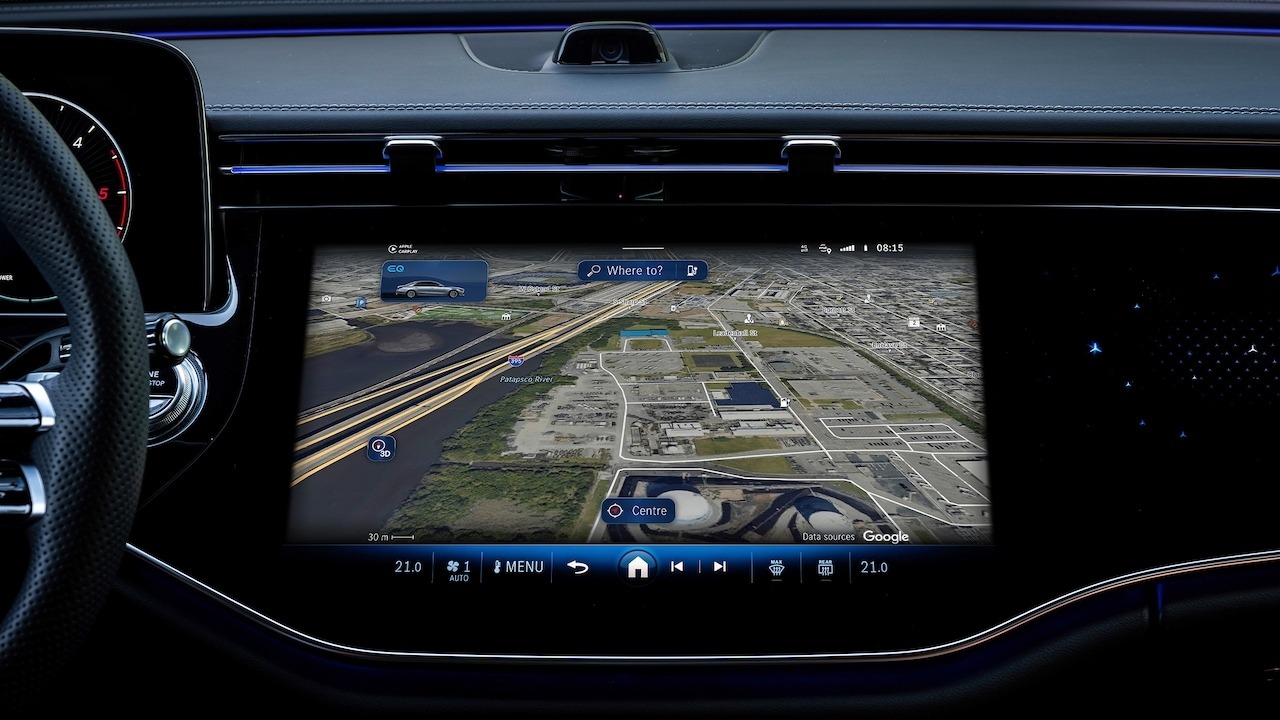
The modern luxury car experience is increasingly defined by software rather than cylinder counts. In 2026, the digital battleground is dominated by three brand-new German architectures: Mercedes-Benz’s AI-driven 4th-Gen MBUX running on MB.OS, BMW’s radical Panoramic iDrive (OS X), and Audi’s minimalist MMI “Digital Stage” (E3 1.2). This technical comparison breaks down their user interfaces, voice intelligence, and real-world ergonomics.
The Digital Cockpit Battle of 2026
Mechanical refinement has reached a baseline parity across luxury manufacturers. Today, the determining factor for tech-savvy buyers is the best luxury infotainment system 2026 vehicles offer. Your daily satisfaction depends heavily on menu latency, natural language processing, and over-the-air (OTA) software stability.
In this luxury car infotainment comparison, we evaluate the three flagship ecosystems defining the premium car segment:
- Mercedes-Benz: 4th-Gen MBUX (with native MB.OS)
- BMW: Panoramic iDrive (Operating System X)
- Audi: MMI Digital Stage (E3 1.2 Electronics Architecture)
System Philosophies & Architecture
Mercedes-Benz 4th-Gen MBUX (MB.OS)
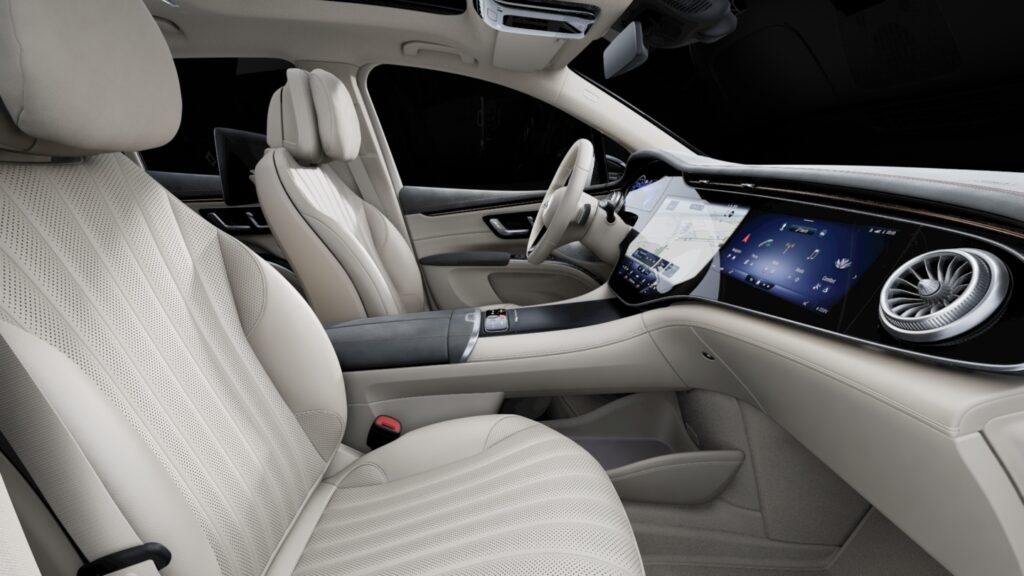
Mercedes has shifted to its proprietary chip-to-cloud MB.OS architecture. Running a smartphone-like “Zero Layer” UI, it leverages a vehicle-grade supercomputer that eliminates deep menu diving by proactively predicting app preferences.
- The Look: Expansive, multi-screen glass layouts spanning from the MBUX Superscreen to the pillar-to-pillar 56-inch Hyperscreen.
- Core Trait: Immersive, visually rich, and highly conversational.
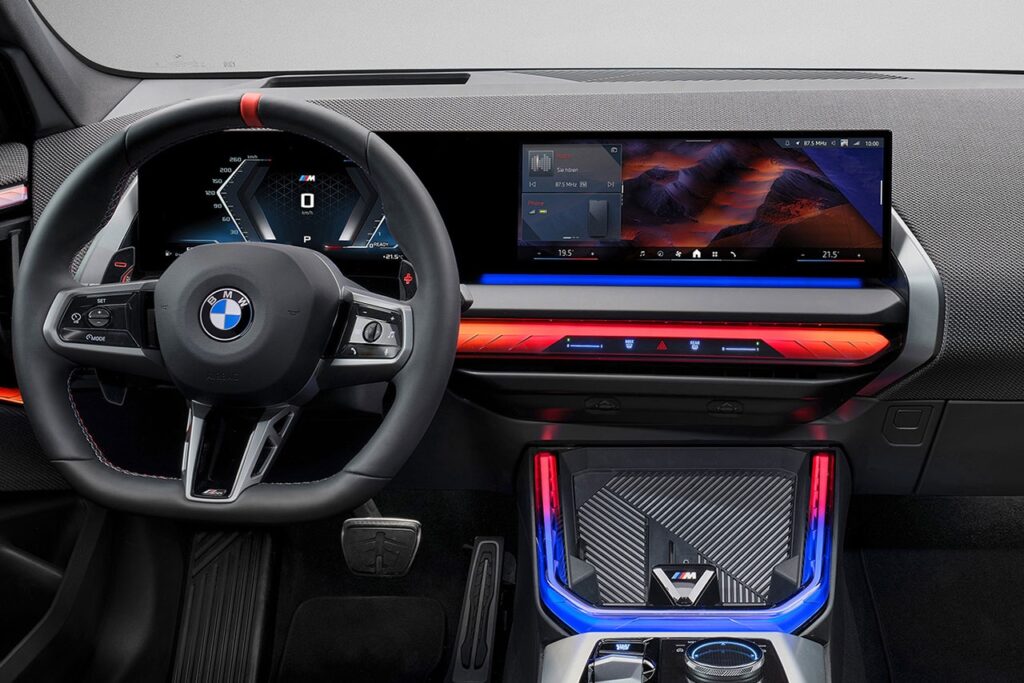
BMW Panoramic iDrive (Operating System X)
Debuting alongside the Neue Klasse vehicle architecture, BMW’s Operating System X breaks away from traditional dials. It anchors the cockpit via BMW Panoramic Vision, a low-profile display projected seamlessly across the entire lower edge of the windshield.
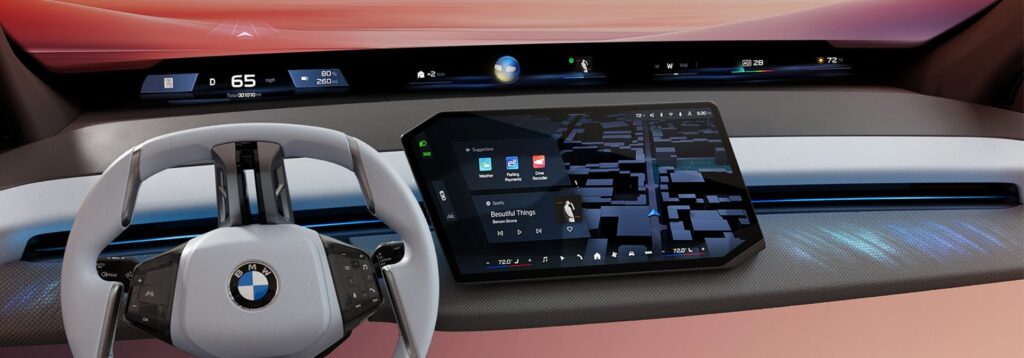
- The Look: A crisp, geometric central display paired with wide-angle windshield projection.
- Core Trait: Ergonomic precision, driver-centric visibility, and minimal physical clutter.
Audi MMI Digital Stage (E3 1.2 Platform)
Introduced on the new Q6 e-tron and A6 e-tron lineups, Audi’s E3 1.2 architecture establishes the MMI Digital Stage. It features a curved OLED panoramic cluster seamlessly integrated with an independent front-passenger display.
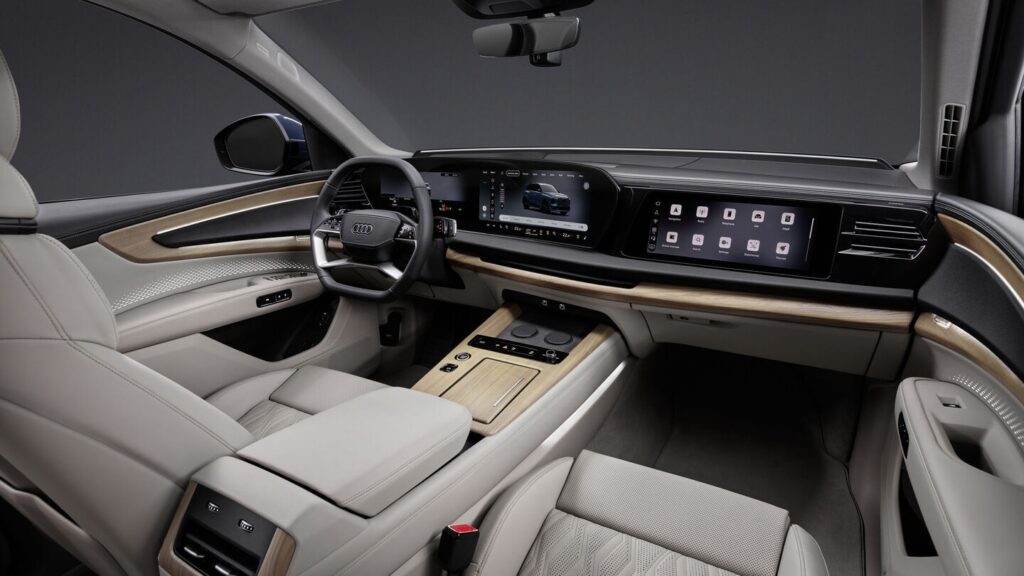
- The Look: Unobtrusive, clean dual-screen design with distinct digital zones.
- Core Trait: Low cognitive load, high visual clarity, and straightforward usability.
Feature Head-to-Head
Voice Intelligence & AI Integration
- MBUX: Powered by a multi-agent AI engine developed with Microsoft and Google. The virtual assistant retains short-term memory across complex, multi-step prompts without requiring rigid trigger words.
- iDrive: Integrates an advanced LLM framework featuring Alexa+ support. It responds instantly to direct vehicle management commands but remains less chatty than Mercedes.
- MMI: Combines native voice systems with Cerence Chat Pro and ChatGPT extensions. Highly accurate for cabin parameters but retains a more functional, structured tone.
Navigation & Mapping Logic
- MBUX: Merges a native Google Maps base with highly advanced Surround Navigation 3D environments, projecting real-time augmented reality directional arrows over camera feeds.
- iDrive: Offers fast routing calculations and stellar HUD integration, mapping charge stops seamlessly for electric models.
- MMI: Highly visible, clean layout across the virtual cockpit. It lacks flashy 3D gimmicks but excels in immediate legibility during highway speeds.
Core Metrics Comparison
| Evaluation Metric | 4th-Gen MBUX (Mercedes) | Panoramic iDrive (BMW) | MMI Digital Stage (Audi) |
| Interface Design | Cinematic, app-grid based | Futuristic, windshield-cast | Linear, zoned architecture |
| Learning Curve | Moderate to steep | Moderate | Easiest / Intuitive |
| Driver Distraction Risk | Moderate (visually intense) | Very Low (eye-level HUD) | Low |
| OTA Update Maturity | High (chip-to-cloud) | High (frequent patches) | Moderate (focuses on stability) |
| Passenger Experience | Exceptional (dedicated screens) | Good (centric to driver) | Excellent (active privacy display) |
The Indian Context: Chauffeur vs. Self-Drive
For buyers in India’s premium car segment India, your position in the cabin dictates which system suits you best:
The Chauffeur-Driven Executive (Choose MBUX or MMI)
Mercedes-Benz focuses heavily on rear-seat connectivity ecosystems, allowing rear passengers to control climate, media, and navigation paths. Audi’s MMI wins on simplicity; its straightforward menu architecture means your driver can operate crucial vehicle systems effortlessly without accidental menu missteps.
The Passionate Self-Driver (Choose iDrive)
BMW’s Operating System X keeps your eyes locked strictly on the tarmac. By projecting telemetry, ADAS indicators, and navigation tracks directly onto the lower windshield plane via Panoramic Vision, it significantly reduces reaction latency compared to traditional center-stack screen layouts.
Conclusion
The concept of the best luxury infotainment system 2026 doesn’t yield a single uniform winner-it depends entirely on your UX preferences:
- Select Mercedes-Benz MBUX if you want an AI-first, conversational rolling supercomputer with jaw-dropping screen presence.
- Select BMW iDrive if you prioritize ergonomic focus, cutting-edge windshield graphics, and zero driving distractions.
- Select Audi MMI if you favor clean European minimalism, immediate usability, and an intuitive layout.
To read comprehensive reviews on incoming luxury car updates, compare vehicle specifications, and decode complex premium automotive technology, follow Motozite for definitive insights.