
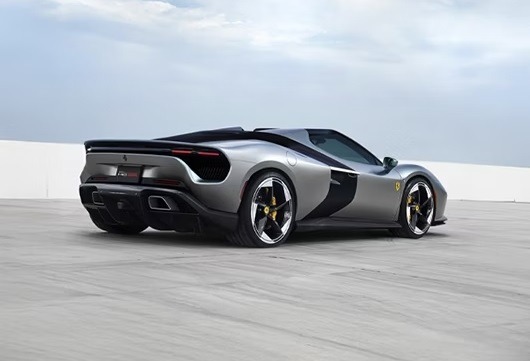
The Indian luxury automobile market is witnessing an unprecedented strategic move from Ferrari. The iconic Italian brand has started accepting customer bookings at approximately 30% lower prices in anticipation of the upcoming India-European Union Free Trade Agreement (FTA). This development is not just a temporary pricing adjustment. It signals a deeper structural transformation in how global luxury automakers are positioning themselves in India’s rapidly evolving high-end automotive market.
Ferrari’s strategic shift is directly tied to industry expectations that the India-EU FTA will drastically reduce import duties on European vehicles. This policy change will fundamentally rewrite the rules of supercar affordability and market availability in India over the coming years.
India-EU FTA: The Policy Trigger Behind Ferrari’s Pricing Strategy
At the heart of this development is the India-EU Free Trade Agreement, which is expected to become fully operational between late 2026 and 2027. Under the current framework of the proposed agreement, import duties on European-made cars priced above 15,000 Euros (approximately 16.8 lakh Rupees) will drop significantly.
- Dramatic Customs Duty Drops: Instead of the current heavy tax regime where Completely Built Units (CBUs) attract a basic customs duty and additional levies totaling 110%, initial FTA implementation will drop duties down to 35% or 40%.
- Long-Term Reductions: Over the subsequent five years of the agreement’s phased rollout, customs duties are projected to slide down to just 10% within an annual quota of 250,000 vehicles.
For an ultra-luxury brand like Ferrari that relies entirely on CBU imports, this is a massive operational shift. The company is actively pre-empting the future tax structure by offering FTA-adjusted indicative pricing on select models today, allowing buyers to book cars with a 30% lower price tag.
Why Ferrari Is Offering Reduced Prices Now
Ferrari’s proactive pricing strategy is driven by a calculated mix of regulatory timing, lengthy supply chains, and market positioning.
- Long Production and Delivery Timelines: Ferrari supercars carry substantial waiting periods, often stretching from several months to over a year depending on personalization. By accepting bookings at the projected lower tax rate now, the brand aligns delivery timelines directly with the expected enforcement date of the trade pact.
- Mitigating Tax Inflation Disincentives: Ultra-luxury buyers are highly aware of tax policies. If buyers know a massive price cut is coming in 2027, they will pause purchases. Offering the adjusted pricing today prevents a complete freeze in current order books.
- First-Mover Competitive Advantage: While rivals like Lamborghini, Aston Martin, and Porsche also stand to benefit immensely from the India-EU FTA, Ferrari has moved first. Capturing early commitments from Indian high-net-worth individuals (HNWIs) secures their order pipeline ahead of the competition.
Which Ferrari Models Benefit from the Lower Pricing?
The 30% price reduction scheme applies strictly to Ferrari’s pure-petrol, internal combustion engine (ICE) models. Hybrid models, such as the 296 GTB and 296 GTS, are currently excluded from this pricing framework because the language surrounding import duty reductions for hybrids under the FTA lacks definitive policy clarity. Pure electric vehicles (EVs) are also excluded from preferential import duties during the initial five years of the pact to safeguard local manufacturing interests.
The pure petrol models qualifying for the adjusted bookings include:
- Ferrari Purosangue: The brand’s high-riding V12 powerhouse sees its standard ex-showroom price of 10.50 crore Rupees drop by roughly 3.15 crore Rupees, bringing the estimated booking price down to 7.35 crore Rupees.
- Ferrari 12Cilindri Coupe: The newly introduced naturally aspirated V12 grand tourer drops from its standard 8.50 crore Rupees down to an estimated 5.95 crore Rupees.
- Ferrari 12Cilindri Spider: The open-top V12 flagship drops from 9.15 crore Rupees to a projected 6.40 crore Rupees.
- Ferrari Amalfi: The highly anticipated twin-turbo V8 successor to the Roma, which opens bookings at 5.59 crore Rupees, sees its indicative post-FTA price fall to 3.91 crore Rupees.
Will Luxury Cars Really Become Cheaper in India?
While a 30% reduction on a Ferrari sounds like an immediate windfall, automotive industry experts suggest looking at the broader market realities. The transition will be highly regulated rather than a sudden price collapse.
- Strict Import Quotas: The lowest 10% tariff rates will only apply to a capped annual allocation of 250,000 vehicles across the entire EU automotive import sector. Once this quota is exhausted, standard higher tax rates apply.
- Currency Volatility: Because these vehicles are priced and imported in Euros, fluctuations in the Euro-INR exchange rate over a 12-month waiting period can easily alter final billing figures.
- Base Price Protection: Manufacturers frequently adjust global base prices to offset inflation, production costs, and advanced engineering technologies. A portion of the tax savings may eventually be balanced out by rising factory costs.
The Macro Impact on India’s Luxury Car Market
Ferrari’s bold strategy marks a defining moment for the Indian automotive retail landscape, sparking three major shifts:
- Shift in HNWI Buying Patterns: Wealthy Indian buyers are no longer waiting for policy implementations. The introduction of pre-FTA bookings has created an immediate surge in order volumes among buyers looking to lock in lower asset values early.
- Accelerated European Investment: The structural tax cuts will make India a much more lucrative market for European premium brands, likely accelerating the introduction of global flagship models to Indian showrooms much faster than before.
- A New Benchmark for Luxury Retail: Ferrari’s move sets a precedent. It forces other ultra-luxury manufacturers to re-evaluate their current order-taking structures and transparently pass on potential fiscal benefits to maintain their market share.
Conclusion: A Forward-Looking Strategy for an Evolving Market
Ferrari’s 30% pricing adjustment strategy is a masterclass in proactive market positioning. By aligning current sales operations with future trade realities, the Italian carmaker is successfully securing its order pipeline and transforming potential policy waiting times into an active sales driver. While final retail prices will ultimately depend on the precise execution dates of the India-EU FTA, the strategy marks the official beginning of a major structural recalibration in India’s supercar space.
As the luxury automotive landscape undergoes this historic trade shift, staying ahead of pricing updates, policy impacts, and exclusive model rollouts is more critical than ever. Follow Motozite for the latest automotive insights, expert analysis, and comprehensive coverage of the trends shaping the premium car market in India.