
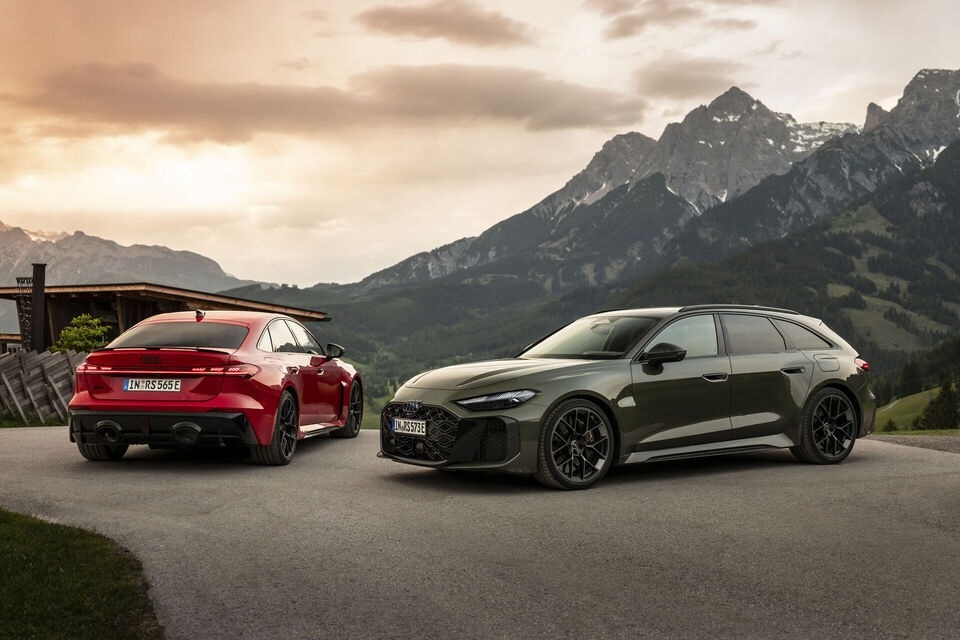
The automotive industry is no longer defined by isolated breakthroughs. Instead, modern automotive excellence is built on a foundation of intense cross-border collaboration, software-driven engineering, and high-performance electrification.
The all-new Audi RS 5 perfectly embodies this paradigm shift. More than just another high-performance sports machine, Audi Sport’s latest flagship represents a highly coordinated, international engineering effort that marries German development expertise with Hungarian manufacturing precision.
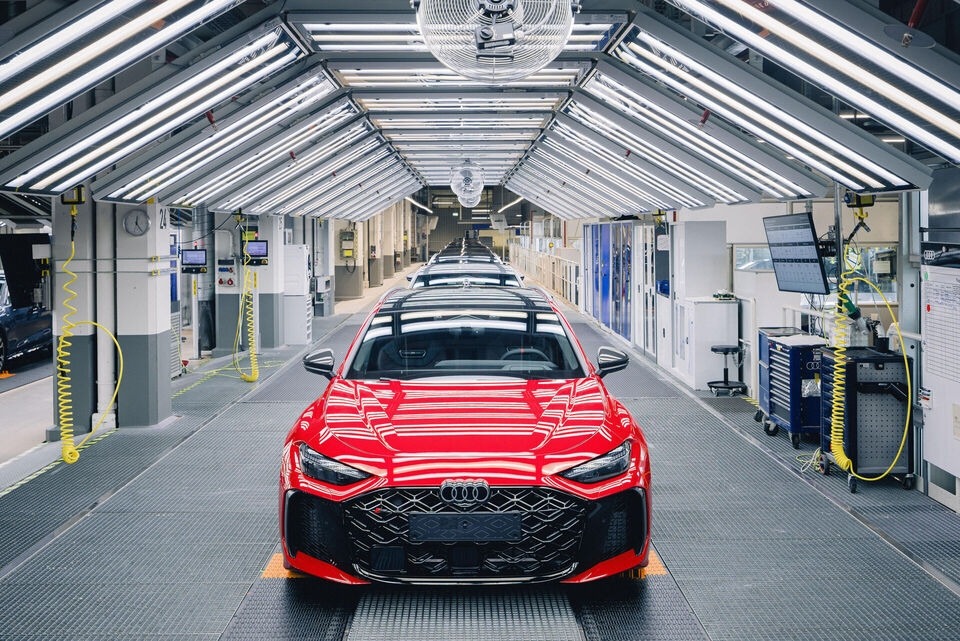
As Audi transitions its legendary RS division toward an electrified future, the new RS 5 marks a historic milestone: it is the first-ever plug-in hybrid (PHEV) from Audi Sport. It serves as definitive proof that hybrid technology can be weaponized for raw performance rather than deployed solely for fuel efficiency.
The Cross-Border Symphony: Neckarsulm Meets Győr
Behind the scenes, the development of the new Audi RS 5 followed a highly structured workflow split between two of Audi’s most vital European hubs: the engineering teams in Neckarsulm, Germany, and the manufacturing specialists at Audi Hungaria in Győr, Hungary.
[Neckarsulm, Germany] ──> (Design, Simulation & Validation) ──> [Győr, Hungary] ──> (Series Production & Continuous Engineering)
This cross-site development strategy splits responsibilities to maximize efficiency:
- The German Team (Neckarsulm): Sascha Srebacic, Head of Engine Mechanics, and his team took charge of the fundamental architecture design, high-voltage component simulation, and initial powertrain validation.
- The Hungarian Team (Győr): Once the pre-production phase matured, the state-of-the-art facility in Győr stepped in to take full ownership of continuous engineering, stress testing, and high-volume series production.
By alternating milestone meetings and using data-synchronized testing labs, the physical distance between Germany and Hungary became practically invisible, accelerating decision-making for this highly complex hybrid platform.
The Power PHEV Heart: Breaking Audi Sport Records
At the center of the new RS 5 is a heavily re-engineered 2.9-liter twin-turbo V6 TFSI engine running on a modified Miller combustion cycle. Equipped with variable geometry turbochargers (VGT) and a 20% increase in thermal efficiency, the V6 alone generates a muscular 375 kW (510 PS).
However, the real magic happens within the casing of the 8-speed Tiptronic automatic transmission. Audi has integrated a 130 kW (177 PS) permanent magnet synchronous electric motor that acts as both a launch booster and the engine starter, discarding the traditional 12V starter motor entirely.
Together, this setup unleashes a combined system output of 470 kW (639 PS) and a mountain-moving 825 Nm of torque, making it one of the most potent RS cars ever engineered.
Technical Specifications: 2026 Audi RS 5
| Specification | Metric Value / Detail |
| Internal Combustion Engine | 2.9-Litre Twin-Turbo V6 (Miller Cycle + VGT) |
| Electric Motor Output | 130 kW (177 PS) & 460 Nm |
| Combined System Power | 470 kW (639 PS / 630 hp) |
| Combined System Torque | 825 Nm (608 lb-ft) |
| 0–100 km/h Acceleration | 3.6 seconds |
| Top Speed | 250 km/h (Limited) / 285 km/h (with Audi Sport Pack) |
| Battery Capacity | 25.9 kWh Gross (22 kWh Net) |
| All-Electric EV Range | Up to 84 km (WLTP) |
| Curb Weight | 2,355 kg (Sedan) / 2,370 kg (Avant) |
A World-First Innovation: quattro with Dynamic Torque Control
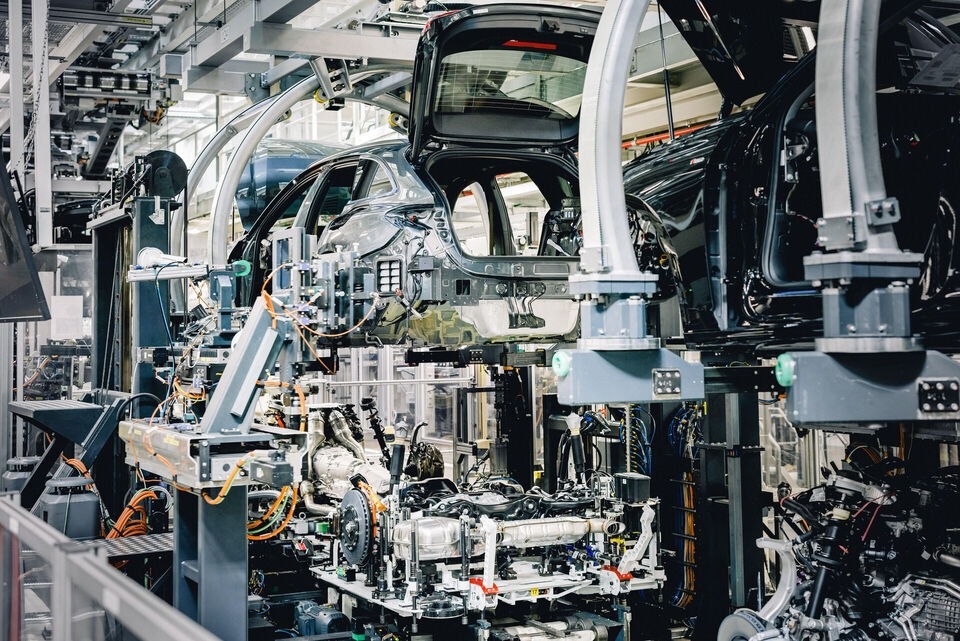
The massive challenge with adding a 25.9 kWh high-voltage battery to a performance car is weight. Tipping the scales at 2,355 kg for the Sedan and 2,370 kg for the Avant wagon, the new RS 5 needed a revolutionary chassis solution to preserve its legendary agility.
Enter the world-first introduction of quattro with Dynamic Torque Control in a production vehicle.
How it works: The rear transaxle houses an independent 8 kW electromechanical torque vectoring unit. A dedicated computer samples traction metrics at a blazing-fast 200 Hz frequency (every 5 milliseconds).
When carving a corner, the system can instantly deploy up to 2,000 Nm of lateral torque differential between the rear wheels within just 15 milliseconds. It functions bidirectionally under hard acceleration, coasting, or mechanical braking, effectively overdriving the outside wheel to neutralize understeer entirely.
Also Read: Audi S5 Sportback Review
From Quiet Commuting to Controlled Drifts
The sophisticated software integration allows the RS 5 to span an incredibly wide spectrum of driving dynamics, effectively giving the car a split personality via Audi Drive Select:
- EV Mode: Allows the car to glide through city centers in near-absolute silence for up to 84 kilometers, utilizing the 400V electrical architecture.
- Dynamic & RS Sport Modes: Tweaks the preloaded center differential to favor a rear-biased power split (sending up to 85% of total power to the rear axle) for maximum corner-exit velocity.
- RS Torque Rear Mode: A new addition designed strictly for closed circuits. It directs maximum torque load exclusively to the outside rear tire, allowing drivers to engage in predictable, controlled oversteer and easily sustained drift angles.
Muscular Aesthetics: A Nod to the Ur-quattro
The visual design of the RS 5 leaves no doubt about its high-performance DNA. To accommodate a heavily revised track width and massive 21-inch alloy wheels, Audi has widened the body panels by 9 centimeters (45 mm on each side) compared to the standard A5.
The aggressively flared, boxed wheel arches are a direct, intentional homage to the iconic 1980s Audi Ur-quattro. Up front, a massive three-dimensional Singleframe honeycomb grille is flanked by darkened Matrix LED headlights featuring a digital “checkered-flag” DRL pattern. At the rear, the trunk integrates a striking ducktail spoiler on the Sedan, while the bumper houses oversized oval RS exhaust tips utilizing fully variable, continuous-opening electronic valves to dictate the V6 soundtrack.
The Motozite Verdict: A New Era of Performance
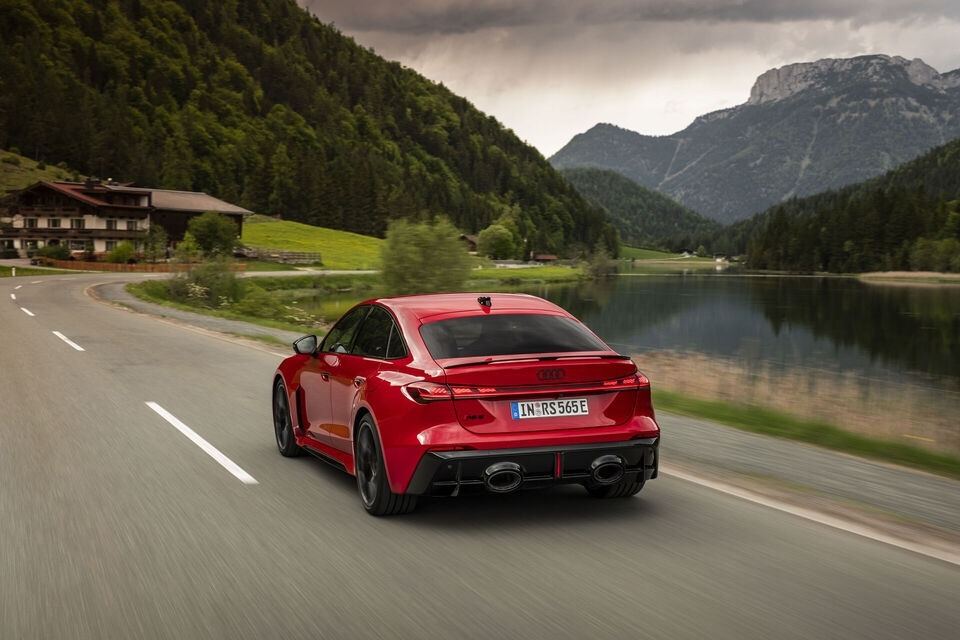
The development journey of the new Audi RS 5 highlights that hybridization doesn’t have to mean compromising on driving engagement. By leveraging the combined engineering muscle of Neckarsulm and Győr, Audi Sport has successfully managed the weight penalty of plug-in electrification, delivering a weaponized daily driver that can seamlessly switch from a zero-emission urban commuter to a track-honing performance monster.
The new RS 5 has already made waves globally, debuting as the official hot-lap car during the Formula 1 Miami Grand Prix and earning stellar praise during media testing on demanding mountain passes. For Indian luxury performance enthusiasts, the RS 5 is poised to be an incredibly vital arrival for Audi India, offering a highly advanced alternative to the Mercedes-AMG C 63 E Performance and the BMW M3.
For the latest updates on booking windows, expected India launch dates, and deep dives into upcoming Audi Sport models, make sure to follow Motozite. Stay tuned as we bring you comprehensive road tests, track reviews, and real-world fuel and battery efficiency comparisons.