
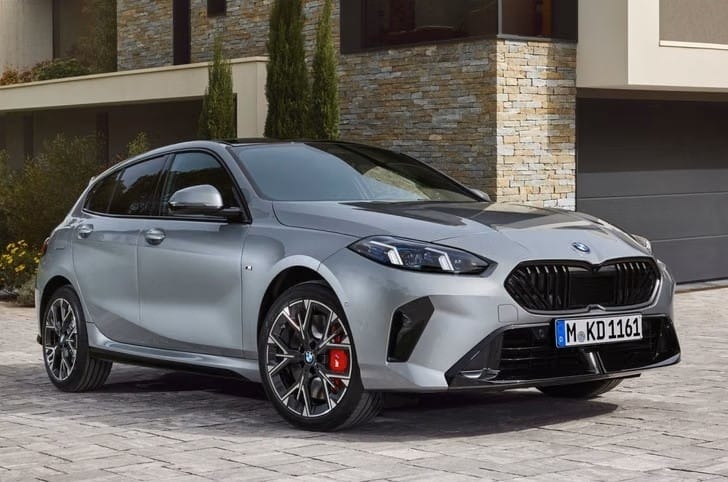
The premium compact segment is preparing for a major structural shift as BMW details its strategy for the fourth-generation 1 Series scheduled for a global rollout in late 2028. As regulatory pressures tighten and competition from global manufacturers intensifies, BMW is executing a multi-pathway engineering strategy. The next-generation premium hatchback will introduce a completely bifurcated architecture, offering a choice between highly efficient combustion engines, advanced plug-in hybrids, and a ground-up fully electric variant.
A New Blueprint for the BMW 1 Series
The upcoming 2028 revision marks the most significant mechanical evolution in the history of the 1 Series line. Rather than utilizing a single shared platform for all variants, BMW is running two entirely separate platform architectures under the same vehicle nameplate.
- The Combustion and Hybrid Strategy: The internal combustion engine (ICE) and plug-in hybrid (PHEV) variants will continue to utilize a heavily revised version of the front-wheel-drive UKL2 architecture.
- The Pure Electric Architecture: The fully electric model, highly anticipated to carry the official i1 moniker and codenamed NB0 internally, will transition to BMW’s dedicated Gen6 Neue Klasse EV platform.
- Targeting Demographic Youth: BMW leadership emphasizes that the 1 Series remains a critical high-volume asset in European markets, specifically across Italy, France, and Spain, serving as the primary entry point to attract younger buyers to the brand portfolio.
The Mechanical Return to Rear-Wheel Drive
The decision to build the electric i1 variant on the Neue Klasse platform directly answers long-standing criticisms from automotive enthusiasts regarding the vehicle dynamics of the model line.
- Rear-Biased Layout: While the ICE and hybrid models retain their front-wheel-drive characteristics due to the UKL2 packaging constraints, the pure electric i1 will feature a rear-wheel-drive configuration as standard.
- Standard Specification Power: The base electric variants are projected to deploy a single rear-mounted motor generating up to 322 horsepower, offering immediate torque and the agile handling characteristics synonymous with classic BMW engineering.
- High-Performance M Variant: The flexible platform infrastructure allows for dual-motor configurations. Sources indicate a high-performance, M-badged all-wheel-drive flagship variant is in development, capable of producing roughly 463 horsepower.
Inside the Neue Klasse Cabin Architecture
Regardless of the underlying powertrain chosen, the 2028 1 Series cabin will undergo a complete digital overhaul, moving away from conventional instrument layouts to maximize spatial efficiency.
- Panoramic iDrive Interface: The dashboard will feature a 43.3-inch-long continuous display running along the base of the windshield, projecting crucial telemetry, navigation, and driver assist alerts into the direct line of sight.
- Slanted Central Interface: Secondary controls, media customization, and vehicular adjustments will be delegated to a 17.9-inch slanted central touchscreen layout.
- The Digital Nervous System: The model will debut an electronic architecture powered by four high-performance central computers, accelerating data processing speeds up to 20 times faster than current hardware to support advanced automated parking and driving assistance.
Market Strategy and Competitive Outlook
The premium compact hatchback market is transforming into a primary battleground for European heritage manufacturers seeking to maintain volume.
- Direct Alternatives: The next-generation 1 Series will position itself against the Audi A2 e-tron and updated entry-level premium hatchbacks from Mercedes-Benz.
- Accessible Premium Pricing: In an effort to counter competitive pressures from emerging international EV options, BMW aims to price the base electric hatchback close to the current gasoline model threshold, targeting a baseline entry point of approximately 30,000 pounds.
The 2028 BMW 1 Series highlights a highly calculated engineering philosophy. By maintaining combustion choices alongside a dedicated, rear-wheel-drive electric architecture, BMW ensures that its entry-level vehicle preserves its historic driving dynamics while adapting seamlessly to an increasingly electrified global landscape.
As development continues at the Munich Research and Innovation Centre, follow Motozite for the latest automotive insights, expert analysis on next-generation platforms, and comprehensive comparisons as the premium compact market evolves.