
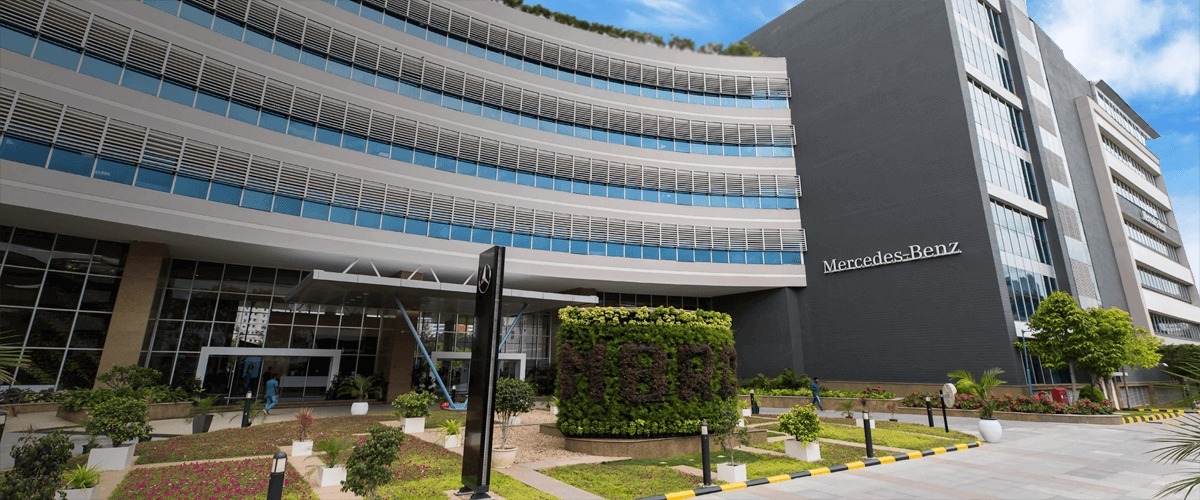
The automotive industry is entering a transformative era defined by electrification, intelligent systems, and advanced materials. In a significant step toward accelerating these innovations, the research arm of Mercedes-Benz in India has partnered with the Indian Institute of Technology Delhi (IIT Delhi) to launch a long-term research collaboration focused on next-generation mobility technologies.
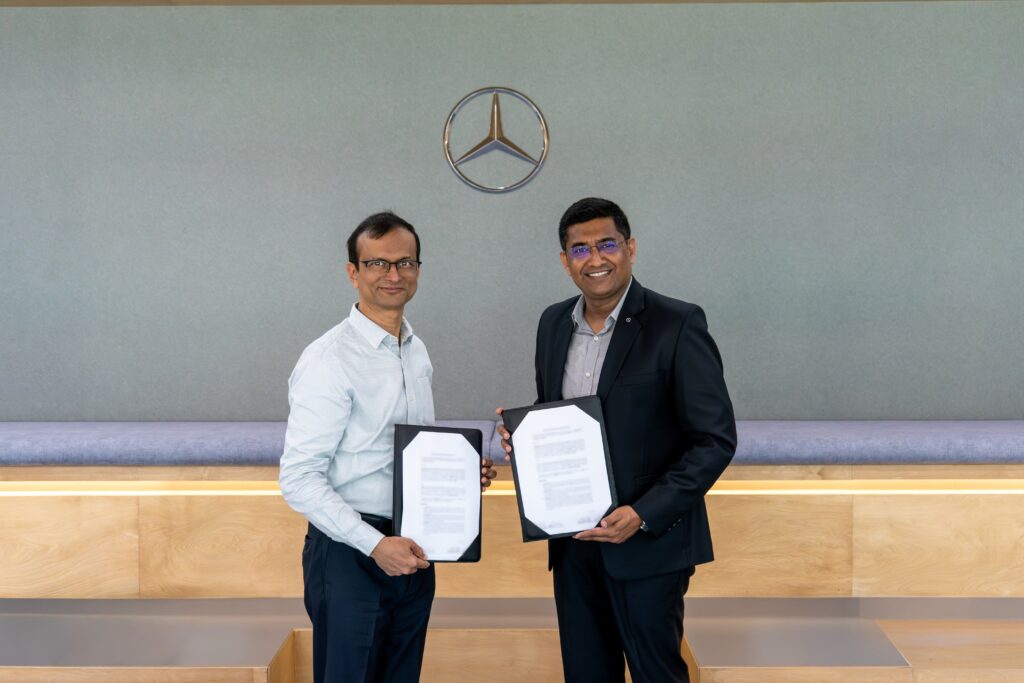
The five-year research agreement between Mercedes-Benz Research and Development India (MBRDI) and IIT Delhi signals a deeper integration between industry and academia. This approach is increasingly seen as critical to solving complex technological challenges in the automotive sector. This collaboration is expected to generate new intellectual property, innovative engineering solutions, and breakthroughs that could shape the future of sustainable mobility.
A Strategic Five-Year Research Collaboration
The partnership is formalized through a Master Research Agreement (MRA) that establishes a structured framework for joint research initiatives over the next five years. Instead of focusing on a single project, the agreement allows both institutions to collaborate on multiple research streams at the intersection of fundamental science and applied engineering.
By combining the academic expertise of IIT Delhi with the industry experience of Mercedes-Benz, the collaboration aims to bridge the gap between laboratory research and real-world automotive applications. According to Manu Saale, Managing Director and CEO of MBRDI, such collaborations represent the future of innovation, where academia and industry work together to address real-world technological challenges.
Key Research Areas Shaping Future Mobility
The partnership will focus on four critical technology domains that are expected to play a major role in the next generation of vehicles and mobility systems:
- Quantum Technologies: Quantum research has the potential to revolutionize sensing, computing, and materials science. In automotive applications, quantum sensors could enable highly precise measurement systems for navigation, safety, and battery diagnostics.
- Electric Mobility: As the global automotive industry transitions toward electric vehicles (EVs), research in battery systems, power management, and energy efficiency becomes essential. The collaboration aims to develop solutions that can accelerate EV adoption while improving performance and sustainability.
- Neuromorphic Engineering: Neuromorphic engineering mimics the functioning of the human brain to create energy-efficient computing systems. These technologies could dramatically improve the efficiency of vehicle AI systems, autonomous driving algorithms, and advanced driver-assistance systems.
- Future Materials: Advanced materials research can lead to lighter, stronger, and more sustainable components, improving vehicle efficiency and durability while reducing environmental impact.
Together, these areas reflect the automotive industry’s shift toward software-defined, electrified, and intelligent vehicles.
First Project: Quantum Sensors and Battery Systems
As part of the initial phase, the partnership has already launched its first research project focusing on quantum sensors and battery technologies. The project is led by professors from the materials science and automotive research departments at IIT Delhi, working closely with MBRDI engineers to develop prototypes and test them in real-world environments. This collaborative model allows academic research to move quickly from theoretical concepts to scalable technological solutions for the automotive industry.
Also Read: Mercedes-Benz: 140 Years of Innovation Driving the Future of Mobility
Strengthening Industry and Academia Collaboration in India
The partnership reflects a broader trend in the technology ecosystem of India: global companies increasingly collaborating with academic institutions to tap into local talent and research capabilities. MBRDI, established in 1996, is the largest R&D center for Mercedes-Benz outside Germany, employing more than 8,500 engineers and professionals across Bengaluru and Pune.
Meanwhile, IIT Delhi remains one of the premier engineering institutions in India, with decades of contributions to science, technology, and innovation. Through this collaboration, both organizations aim to achieve several key objectives:
- Accelerate innovation in advanced mobility systems.
- Develop commercially viable technologies and intellectual property.
- Address mobility challenges in India while maintaining global relevance.
Why This Partnership Matters for the Automotive Industry
The collaboration between Mercedes-Benz and IIT Delhi highlights several important shifts in the automotive landscape:
- Innovation Requires Collaboration: Complex technologies such as quantum computing and neuromorphic engineering require interdisciplinary expertise that often spans academia and industry.
- Growing Role of India in Global R&D: India is becoming a key hub for automotive innovation, thanks to its engineering talent and expanding research ecosystem.
- Technology-Driven Mobility: Future vehicles will rely heavily on advanced software, AI, and materials science, areas where academic institutions play a vital role.
The Road Ahead
The Mercedes-Benz and IIT Delhi partnership represents more than a research agreement; it is a strategic investment in the future of mobility innovation. By combining academic research excellence with industrial engineering expertise, the collaboration has the potential to deliver breakthroughs in electric mobility, intelligent computing, and advanced materials. Over the next five years, the outcomes of this initiative could influence not only the future of Mercedes-Benz vehicles but also the broader global mobility ecosystem.
As the automotive sector evolves toward smarter, cleaner, and more connected transportation systems, partnerships like this may become the cornerstone of next-generation mobility innovation. Stay tuned to Motozite for more automotive insights, industry trends, and expert analysis on the technologies redefining the way we move. Follow Motozite for the latest updates on global automotive collaborations and the future of luxury mobility.