
Explore how Ferrari’s bold design strategy-with Apple design icons Jony Ive and Marc Newson leading the charge-reinvents the luxury EV interior by blending tactile craftsmanship with high-performance heritage.
Ferrari has long been synonymous with passionate design, breath-taking performance, and visceral driving experiences. As the automotive world accelerates toward electrification, the challenge for the iconic Italian marque is not just how to electrify its powertrains, but how to make an electric Ferrari feel unmistakably like a Ferrari. The answer lies in a radical reimagining of the cockpit.
The Ferrari Luce: A New Era Begins
Ferrari’s first fully electric vehicle is officially named the Ferrari Luce, meaning light in Italian. This EV marks a seismic shift for the brand, yet its interior signals a firm intent to preserve what makes Ferrari cars emotionally resonant. Instead of embracing the sea of screens and capacitive touch panels common in many modern EV cabins, the Luce’s cockpit places tactile, physical controls and premium materials at the forefront.
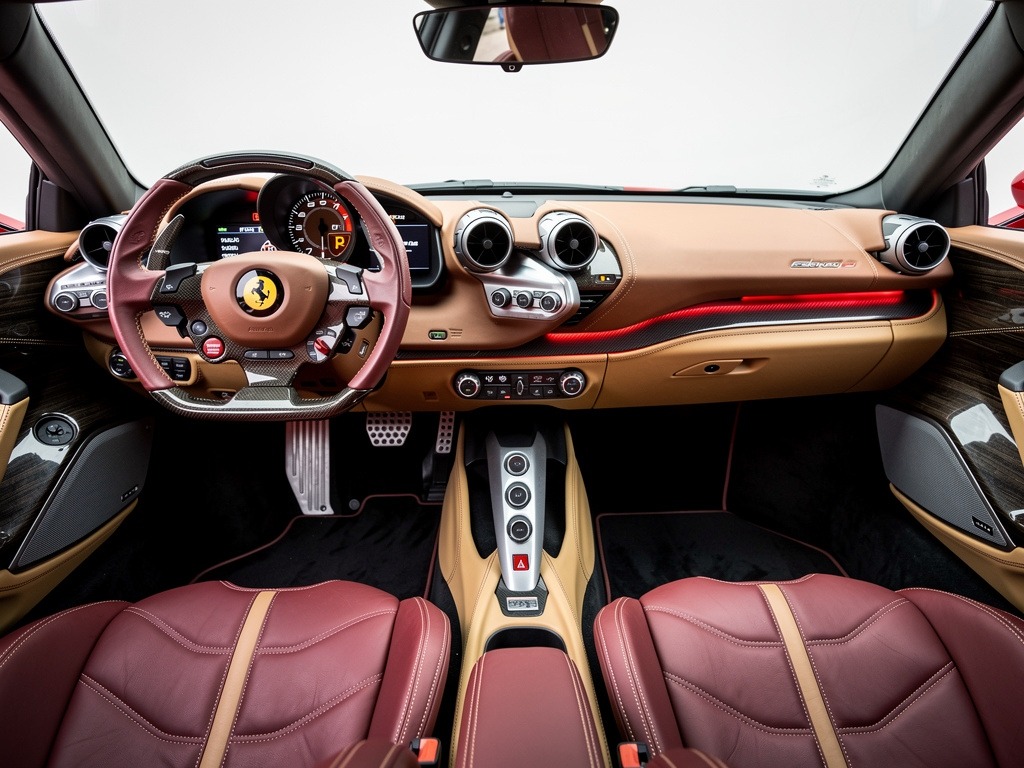
This direction represents a thoughtful departure from the digital-first norms. Rather than burying essential driving functions in software menus, Ferrari’s interior prioritizes intuitive ergonomics, material richness, and sensory engagement. It is a strategy that could steer the future of automotive cabin design.
Design Philosophy: Craftsmanship Over Screens
At the heart of Ferrari’s bold move is a design philosophy championed by Sir Jony Ive and Marc Newson, founders of the design firm LoveFrom. Both designers bring decades of experience blending product excellence with deep aesthetic sensibilities. Ive, famed for shaping Apple’s iconic product lineup, and Newson, a renowned industrial designer, have collaborated with Ferrari’s Flavio Manzoni to deliver a cabin that feels alive to the touch.
Tactile Controls and Analog Soul
The Ferrari Luce cockpit is defined not by sprawling digital surfaces, but by knobs, buttons, dials, and switches that feel purposeful and satisfying.
- Physical Switches: Precision-engineered mechanical toggles replace complex touchscreen menus for core vehicle functions like climate control and media.
- The Steering Wheel: A lightweight, three-spoke design features dedicated tactile controls for indicators and wipers, alongside the iconic Manettino dial for drive modes including Range, Tour, and Performance.
- The Glass Key: A bespoke key featuring an E-Ink display docks into the center console. When inserted, the Ferrari yellow on the key transitions across the interface, initiating a choreographed startup ritual.
- Launch Mode: In a nod to aerospace design, a physical pull handle located in the overhead console initiates the vehicle’s launch mode.
This analog emphasis retains a connection to mechanical driving sensations, even as the Luce taps into a quad-motor powertrain delivering over 1,000 horsepower.
Balancing Digital and Physical Innovation
While physical controls take center stage, Ferrari has integrated modern digital capabilities with surgical precision.
- Layered OLED Displays: The 12.5-inch instrument cluster uses overlapping OLED panels and convex lenses to create a sense of three-dimensional depth, making digital graphics appear with the clarity of physical dials.
- Pivoting Control Panel: A 10-inch central touchscreen is mounted on a ball-and-socket joint. Using a machined aluminum grab handle, the driver or passenger can easily reorient the screen.
- Multi-Function Clock: A physical clock with a digital face sits above the main screen. It can transform into a compass or a stopwatch depending on the driving mode.
This hybrid approach preserves digital versatility without distracting the driver, championing focus and engagement over visual complexity.
Why Ferrari’s Approach Matters
Ferrari’s interior strategy has significant industry-wide implications.
- Redefining EV Luxury: As electric vehicles proliferate, the Luce challenges the notion that massive screens are the only marker of luxury.
- Driver-Centric Safety: By utilizing physical controls that can be operated by feel, Ferrari reduces cognitive load and helps drivers keep their eyes on the road.
- Heritage Meets Innovation: Melding racing DNA with forward-thinking materials like Corning Gorilla Glass and recycled aluminum preserves brand identity in an electrified future.
This design choice signals a broader trend: even in a digital age, drivers crave touch, texture, and intentionality. Ferrari’s gamble may well influence how other luxury brands approach the next generation of EV interiors.
Final Verdict: A New Type of Ferrari Experience
The Ferrari Luce cockpit is a statement about what the future of high-end performance should feel like. By blending artisanal materials, mechanical precision, and selective digital innovation, Ferrari is reshaping expectations for electric supercars. Whether you are a traditional automotive enthusiast or an EV newcomer, the Luce suggests that great design is not defined by the size of a screen, but by the quality of the intention.
Stay tuned for the next chapter of this journey, as Ferrari plans the full exterior reveal of the Luce in May 2026.
The Ferrari Luce represents a bold step into the future of electrification without sacrificing the soul of the Prancing Horse. As the automotive landscape continues to evolve, these design choices will define the boundary between technology and emotion. Follow Motozite for more exclusive automotive insights, expert analysis of the latest trends, and deep dives into the machines shaping our world.
Also read: Ferrari Elettrica: Ferrari’s First Electric Supercar to Debut in 2026 with 1,000 HP Powertrain