
The global automotive industry is navigating one of its most volatile phases in decades, and Audi’s latest financial outlook reflects both the significant hurdles and the strategic opportunities ahead. While the German luxury carmaker expects a margin rebound in 2026, persistent headwinds such as international tariffs, shifting electric vehicle (EV) demand, and intense global competition continue to shape its trajectory.
The following analysis provides a deep dive into Audi’s current strategy, financial outlook, and what these developments mean for the broader automotive landscape.
Audi Forecasts Margin Recovery in 2026
Audi, a key pillar of the Volkswagen Group, has projected an operating margin between 6% and 8% for the 2026 fiscal year. This targets a necessary recovery from the 5.1% margin recorded in 2025. This projected improvement follows a challenging year defined by several financial pressures:
- Operating profit fell approximately 14% to 3.37 billion euros in 2025.
- Profitability was squeezed by high restructuring costs and a difficult transition period for new model platforms.
- Despite these setbacks, the company reported a record 223,000 EV deliveries in 2025, a 36% increase that signals strong underlying demand for its electrified portfolio.
The Tariff Challenge: A 1.2 Billion Euro Blow
One of the most immediate obstacles to Audi’s profitability has been the impact of U.S. import tariffs. In 2025 alone, these duties cost the company approximately 1.2 billion euros. The lack of a major manufacturing footprint in the United States leaves Audi more exposed to trade fluctuations than some of its localized competitors.
To mitigate these ongoing costs, Audi is actively evaluating the establishment of production facilities within the U.S. This move would be a foundational shift in its global manufacturing strategy, aimed at protecting long-term margins from geopolitical trade tensions.
China Market Dynamics and Global Competition
Audi continues to face a complex environment in China, which remains the world’s largest automotive market. While the company maintained a leading position in the gasoline-powered luxury segment with the A6L and Q5L, overall deliveries in the region dropped 5% in 2025. Key factors include:
- Fierce price wars in the EV and hybrid segments led by domestic Chinese manufacturers.
- Rapidly increasing competition from brands like BYD, which are aggressively expanding their premium offerings.
- A strategic pivot toward China-exclusive models, such as the recently launched AUDI E5 Sportback and the upcoming AUDI E7X, to better align with local consumer preferences.
The EV Transition: Balancing Innovation and Cost
Audi’s aggressive push into electrification is a core component of its future, yet it presents a delicate balancing act for the balance sheet.
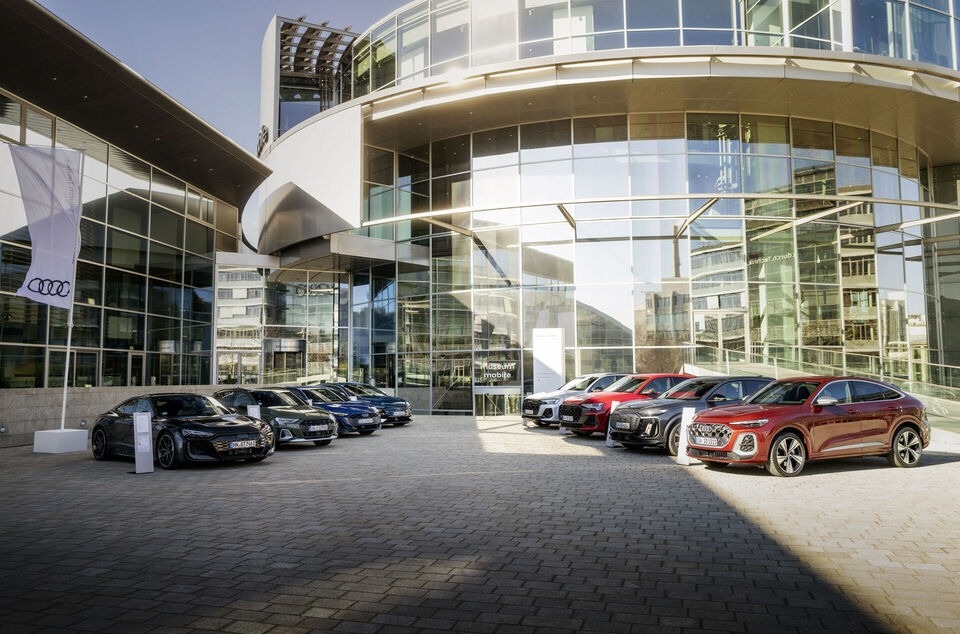
- Product Offensive: Audi is in the midst of a massive rollout, with plans to introduce 20 new or refreshed models. High-profile releases like the Q6 e-tron and the upcoming A2 e-tron are designed to capture diverse market segments.
- Platform Hurdles: Development costs for the new Premium Platform Electric (PPE) and delays in software integration have created temporary financial strain.
- Hybrid Flexibility: To manage slower-than-expected EV adoption in certain regions, Audi is maintaining a flexible approach by continuing to invest in highly efficient internal combustion engine (ICE) and plug-in hybrid (PHEV) models through the end of the decade.
Restructuring and Efficiency Measures
To secure the 2026 margin targets, Audi has implemented a rigorous restructuring plan known as the “Audi Agenda.” This initiative focuses on streamlining operations and reducing overhead:
- A planned reduction of up to 7,500 jobs by 2029, primarily in non-production and administrative roles.
- The implementation of a performance program targeting 1 billion euros in annual savings.
- Approximately 65% of the initial workforce adjustments have already been agreed upon, showing strong execution of the efficiency roadmap.
Product Strategy: Driving Future Growth
Innovation remains the primary lever for Audi’s recovery. The company is doubling down on high-margin segments and entry-level electric mobility:
- Flagship Expansion: The launch of the Audi Q9 will provide a direct competitor in the full-size luxury SUV segment, particularly for the U.S. and Middle Eastern markets.
- Entry-Level Accessibility: The newly announced A2 e-tron will serve as a compact, premium entry point into the Audi electric lineup.
- Core Refresh: Continued updates to the Q7, Q4 e-tron, and the high-performance RS series ensure the brand remains competitive across its traditional strongholds.
Automotive Industry Outlook
Audi’s situation is a microcosm of the broader industry. Automakers worldwide are grappling with rising production costs, trade uncertainties, and the massive capital requirements of the dual transition to software-defined vehicles and electrification. Audi’s journey toward 2026 serves as a benchmark for how legacy luxury brands can adapt to a rapidly shifting global ecosystem by balancing cost discipline with bold product innovation.
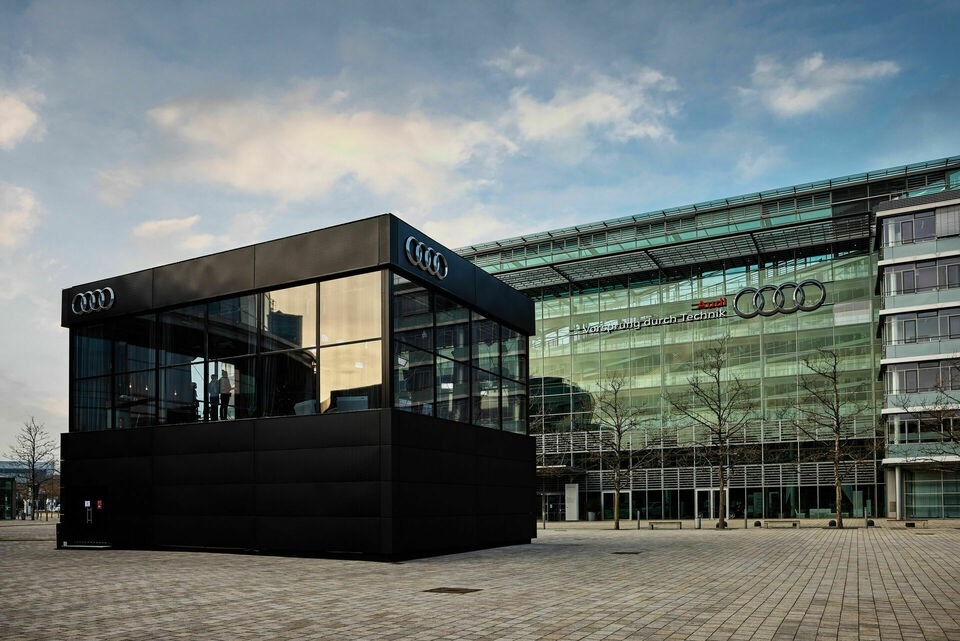
Audi’s 2026 outlook reflects a premium brand in the middle of a sophisticated transformation. While the projected margin rebound is a positive signal for investors and enthusiasts alike, the road ahead will require constant adaptation to geopolitical shifts and evolving consumer technology. As Audi navigates these challenges, its ability to remain “Vorsprung durch Technik” will depend on how effectively it integrates its legendary engineering with the new realities of the digital and electric age.
Follow Motozite for the latest automotive insights, expert analysis on global industry trends, and in-depth luxury vehicle comparisons as we track the future of mobility.