
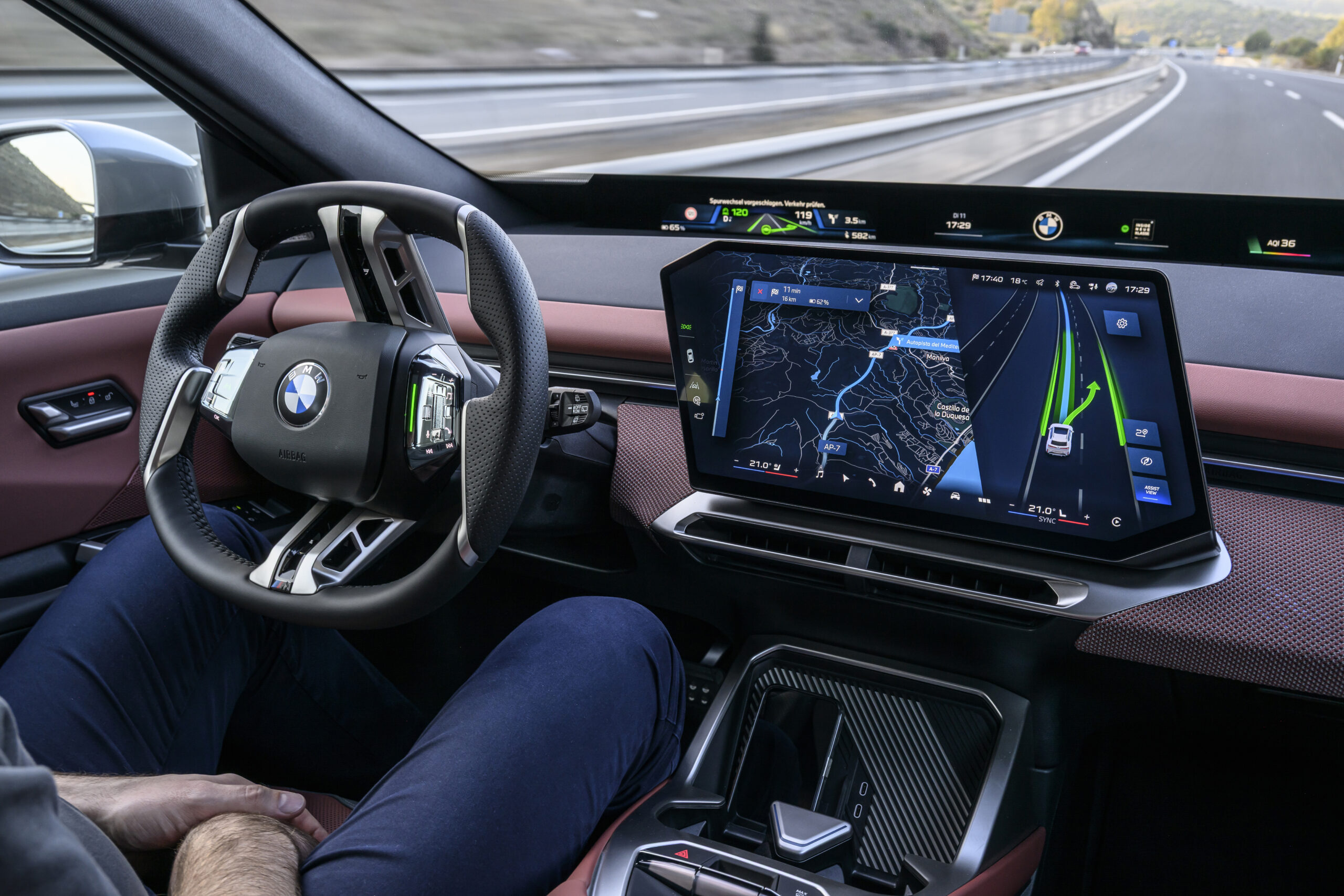
BMW has hit a defining milestone in the race for advanced driver assistance systems (ADAS). The Bavarian automaker officially announced that its customers have cumulatively logged over 200 million kilometres (approximately 125 million miles) using the hands-free capabilities of the BMW Highway Assistant.
Unlike clinical simulations or closed-circuit manufacturer testing, this massive dataset represents real-world, daily driving by owners across the globe. As premium manufacturers navigate the tricky transition between human control and automation, BMW’s milestone signals a significant shift: hands-free highway cruising is rapidly evolving from a high-tech novelty into an indispensable daily habit for thousands of luxury car buyers.
A Real-World Milestone: Validating Everyday Automation
The 200 million kilometre metric is crucial because it acts as a massive validation of consumer trust. The feature, which allows drivers to completely remove their hands from the steering wheel at speeds up to 130 km/h on designated divided highways, is actively deployed across multiple core model lines, including the 5 Series, 7 Series, iX, X5, X6, X7, and XM.
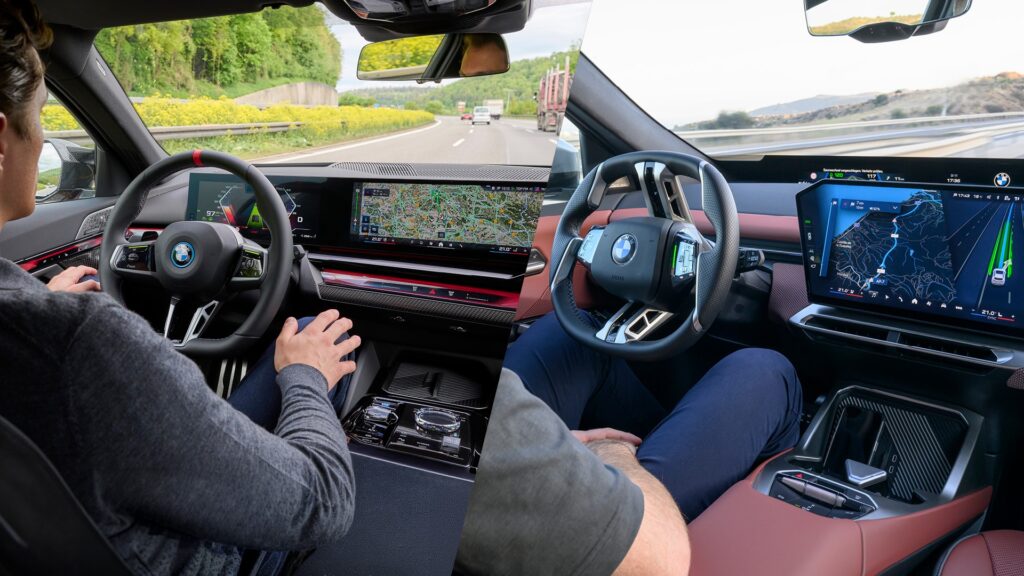
Crucially, the next evolutionary leap for this technology is rolling out alongside the highly anticipated BMW iX3, the opening act of BMW’s next-generation Neue Klasse family, followed by the upcoming i3 sedan and the new generation X5 (G65).
The Strategic Pivot: Scrapping Level 3 for Symbiotic Level 2
Behind this milestone lies an intriguing shift in BMW’s autonomy strategy. While the pre-facelift 7 Series briefly offered a highly complex, ultra-expensive SAE Level 3 system called Personal Pilot L3, the automaker has quietly moved away from that project due to immense development costs and low buyer take rates.
Instead, BMW is putting all of its engineering muscle into Symbiotic Drive Level 2. The brand’s philosophy is clear: the goal isn’t to erase the human driver from the equation, but to build a seamless, safe, and collaborative relationship between human intent and artificial intelligence.
The Hardware Leap: In Neue Klasse models like the new iX3, the tech is powered by a brand-new high-performance computer affectionately dubbed the “Superbrain of Automated Driving.” This centralized chip packs over 20 times the computing capacity of its predecessor, allowing it to seamlessly synthesize data from high-resolution mapping, side-facing cameras, and radar networks simultaneously.
Models, Frameworks, and the “Superbrain” Architecture
BMW Highway Assistant at a Glance
| Feature Parameter | Technical Specification / Detail |
| Max Hands-Free Speed | Up to 130 km/h (81 mph) |
| Autonomy Classification | SAE Level 2 (Driver retains legal responsibility) |
| Core Computing Hardware | Next-Gen “Superbrain” ADAS Computer |
| New Model Rollouts | BMW iX3 (Neue Klasse), Future i3, 7 Series/i7, 2026 X5 (G65) |
| Key Regulatory Milestone | First to receive UN Regulation No. 171 (DCAS) type approval |
The DCAS Framework: Borderless Hands-Free Across Europe
Previously, using the Highway Assistant was heavily fragmented by geography, largely restricted to the United States, Canada, and Germany due to localized regulatory constraints.
That barrier has officially dissolved. BMW is the first manufacturer to secure international type approval under the United Nations’ new UN Regulation No. 171 for Driver Control Assistance Systems (DCAS).
Because DCAS allows a single regulatory authority’s approval to apply across all participating nations, BMW is instantly expanding hands-free driving capabilities to over 20 European countries. The initial rollout activates the tech across Germany, Austria, Switzerland, Italy, France, and the Benelux region, with the UK, Ireland, Spain, and Portugal slated to follow immediately.
Entry-to-Exit Autonomy and Glance-Activated Lane Changes
The latest iteration of the Highway Assistant introduces three groundbreaking functional updates that alter how the car behaves on the motorway:
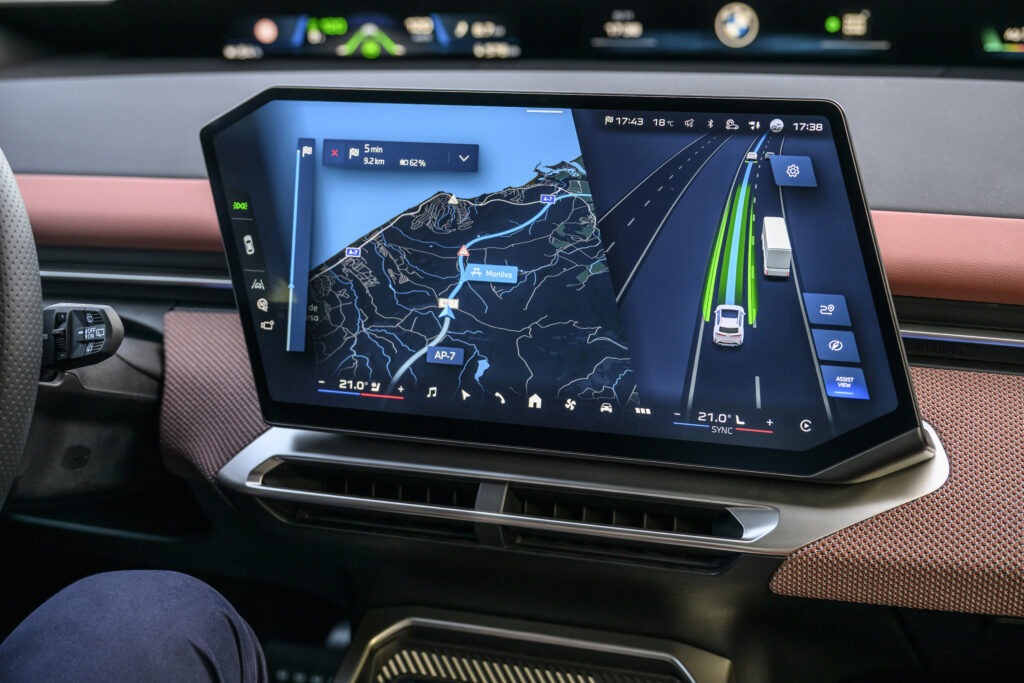
- Entry-to-Exit Support: When a route is actively programmed into BMW Maps, the system takes over longitudinal and lateral control the moment the vehicle merges onto the highway, maintaining autonomous lane centring and speed regulations across complex multi-highway interchanges right up until the exit slip ramp.
- Glance-Activated Lane Changes: If the vehicle approaches a slower-moving car, the system calculates a safe overtaking maneuver and suggests a lane change via the digital cluster. Rather than requiring physical turn-signal clicking, the driver simply looks directly into the corresponding wing mirror. The cabin’s eye-tracking sensors register the glance as a safety confirmation, and the vehicle automatically executes the lane change.
- Symbiotic Steering & Braking: Under older ADAS setups, any human input would instantly disengage the cruise control. BMW’s new system allows drivers to gently nudge the steering wheel or tap the throttle to adjust their position within a lane or close a gap without turning off the system. The AI absorbs the human input and seamlessly resumes tracking once the driver relaxes.
The Safety Net: Relocated Eye-Tracking & Active Shutoff
Because Level 2 autonomy legally demands that the driver remain attentive, BMW has heavily reinforced its driver-monitoring architecture.
In older models, the driver-monitoring camera sat directly behind the steering wheel hub, occasionally obscured by hand placement or specific steering angles. In the new Neue Klasse models like the iX3, the camera has been repositioned directly beneath the rearview mirror, providing an uninhibited, wide-angle view of the driver’s eyes, head angle, and general gaze direction.
If the system detects that the driver’s eyes have drifted away from the road for more than a few seconds, the hands-free function triggers audible and visual alerts. If ignored, the system safely disables the hands-free mode. Furthermore, in markets like Germany, the highway tech is paired with a City Assistant capable of reading traffic lights, automatically bringing the vehicle to a halt at a red light and launching only when the light flips to green, provided the driver is looking forward.
The Motozite Take
BMW’s 200 million kilometre milestone proves that highly optimized Level 2 systems are currently delivering far more practical value to luxury consumers than the elusive dream of fully driverless Level 5 autonomy. By perfecting the hand-off between human and machine rather than aiming for total automation at all costs, BMW is building a system that genuinely reduces long-distance highway fatigue while keeping the “Sheer Driving Pleasure” ethos alive.
For the Indian premium market, where infrastructure is modernizing rapidly through expansive expressway networks, highly advanced ADAS suites are becoming an essential talking point for luxury buyers. While hands-free driving at 130 km/h requires highly specific regulatory and localized mapping clearance, the tech trickling down from BMW’s new centralized “Superbrain” architecture will undoubtedly redefine the safety and sophistication of the vehicles landing on our shores in the near future.
For more exclusive deep dives into autonomous vehicle frameworks, upcoming luxury launches, and the latest news shaping the global premium car market, follow Motozite. Stay tuned for our upcoming real-world tests of the latest driver assistance technologies.